
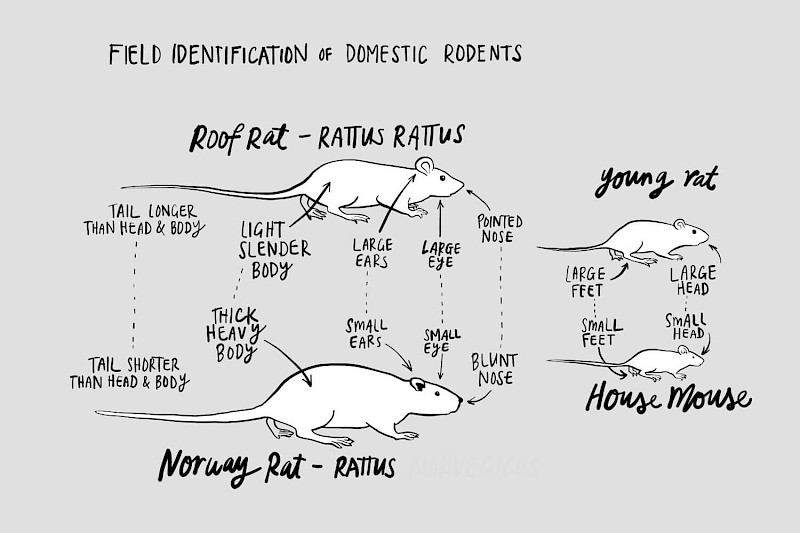
 Aotearoa was rat-free before humans arrived; now we have three species (plus mice).
Kiore (Rattus exulans; aka Polynesian rat). The ancestors of Māori brought kiore here from Polynesia around 700 years ago. Some Māori consider it a taonga and the kiore is not an Urban Ark target species. In most parts of the country it has long been out-competed by bigger and more voracious ship rats and Norway rats, and kiore are now found only in the south of the South Island and on some offshore islands.
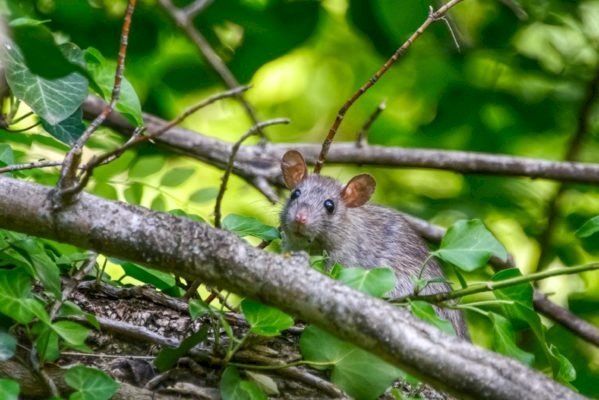 Ship rat (Rattus rattus; aka black rat, roof rat or house rat). This long-tailed rodent is the predominant rat in most areas in NZ. It is a great climber and generally looks darker than the Norway rat. It is also more voracious. The rat gestation period is approximately 3 weeks. In urban environments where conditions are favourable, rats may reproduce year round and have as many as 5 litters per year with 4–8 young per litter. Additionally, number of young per litter will increase with the size and maturity of the female
Wild rats have very short life spans. The probability of dying is 90–95 % per year, meaning that most rats do not survive beyond 1 year of age. Males tend to die at a younger age than females. Although there is little information on the causes of rat mortality, it has been suggested that mortality is primarily a function of resource limitations combined with interspecies competition. The effect of predation is thought to be negligible in a well established population. Predators such as cats tend to kill smaller rats, resulting in the selective removal of juveniles.
Norway rat (Rattus norvegicus; aka brown rat, common rat or sewer rat ). Generally larger than a ship rat but with a shorter tail, the Norway rat doesn’t generally climb but is an excellent swimmer. You’ll find them all over Auckland but particularly close to waterways, wetlands and beaches.
Mice (Mus musculus). It is often hard to tell a young rat from a mouse. Predator Free Wellington have some good guideance.