
Urban Ark – Manawa Taiao
  • About us
    • Operations Team
    • Trust Board
    • Partners
    • Vision
    • Plan
    • Origin
  • Visit us
  • Support us
  • Get involved
    • Join a group
    • Remove predators
    • Pest plant control
    • Plant natives
    • Back gardens
    • Education
    • Other ways you can help
  • Biodiversity
    • Ngā manu / birds
    • Ngā pekepeka / bats
    • Ngā mokomoko / skinks and geckos
    • Ngā pūrerehua / butterflies and moths
    • Ngā tuaiwi-kore / invertebrates
    • Taiao / Landscapes
  • Resources
    • Trapping activity maps
    • How to trap
    • The Workshop
    • Tool library
    • Pest animal monitoring
    • Manage pets
    • Being a good citizen
    • Flood Resilience
  • News
  • Events
  1. Home
  2. Biodiversity
  3. Ngā pekepeka / bats

Ngā pekepeka / bats

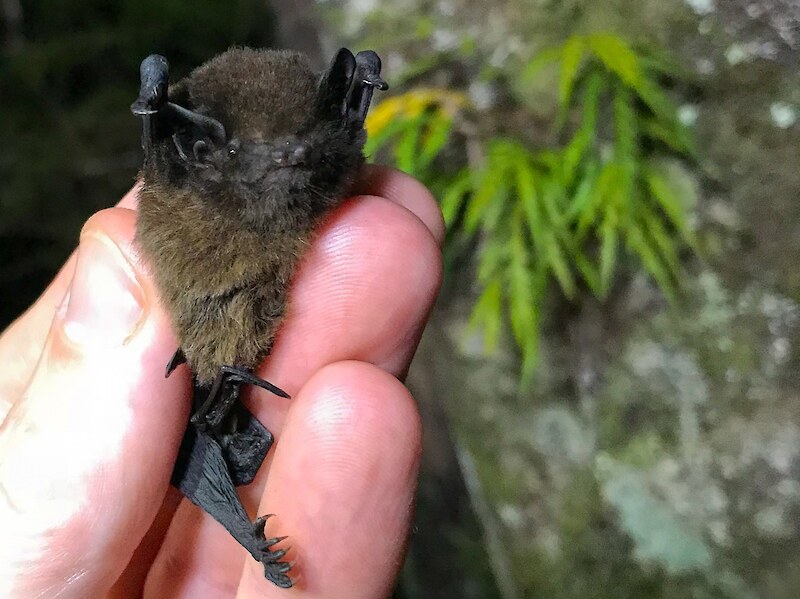
New Zealand long-tailed bats (pekapeka tou roa; Chalinolobus tuberculatus) are found in the forest areas of Te Wao Nui o Tiriwa / Waitākere Ranges, but we’re not sure if bats can still be found in central Tāmaki.

We’d love to hear from you if think you’ve seen or heard them. Bats feed on moths, midges, and flying insects at dawn and dusk and help with pollination of native species. In fact, bats are a great indicator species as they are sensitive to all sorts of threats:

  • Mammalian predators Reducing the number of rats, stoats and possums really makes life easier for bats. Feral cats are also an issue, and even domestic cats are best kept in from dusk until dawn.
  • Forest fragmentation Bats need forested corridors along which to travel. These should be planned into urban designs.
  • Loss of habitat Bats nest in holes in old trees and like species with loose bark. To encourage bats we need to hang onto old trees, even exotics like gums, willows, macrocarpa and pines.

Detecting bats

Bats use echolocation to detect their insect prey, but the frequency is too high for human ears. Bat detectors bring that frequency down to clicks and buzzes we can hear. If you suspect you might have bats, you can borrow a bat detector from us and we’ll help you to determine the results.

Urban Ark runs periodic stream walks, heading out at dusk on warm evenings exploring forest margins, focusing on areas where there are mature trees (good for roosts) and fresh water. As well as being excellent opportunities to listen for rūrū (morepork), spot eels and native fish and generally enjoy an evening stroll, we’ve often carried bat detectors.

In recent years we’ve tried:

  • Chamberlain Park fringe along Waitītiko / Meola Creek
  • Western Springs Park and Bullock Track Bush
  • Jaggers Bush and Lower Waitītiko / Meola Creek
  • Te Auaunga / Oakley Creek from the railway to the sea.
  • Pukekawa / Auckland Domain
  • Gribblehirst Park

Resources

  • Auckland Council produce and informative Long-Tailed Bat fact sheet (PDF, 3.45 MB).
  • Kids Greening Taupo have an excellent bat webpage for our younger pekapeka fans.
  • Friend of Urban Ark and Senior Conservation Advisor at Auckland Council, Ben Paris, is NZ batman actove on both Facebook and Instagram.

In this section

  • Biodiversity
    • Ngā manu / birds
      • Kākā
      • Kākāriki
      • Kererū
      • Korimako / Bellbird
      • Riroriro / Grey Warbler
      • Ruru / Morepork
      • Tūī
      • Rogues gallery
    • Ngā pekepeka / bats
    • Ngā mokomoko / skinks and geckos
    • Ngā pūrerehua / butterflies and moths
    • Ngā tuaiwi-kore / invertebrates
    • Taiao / Landscapes
      • Maunga / volcanoes
      • Awa / streams
        • Te Auaunga / Oakley Creek
      • Ngāhere / forests
        • Lava Rock Forests
  • Facebook
  • Instagram
Subscribe to our newsletter

© Urban Ark – Manawa Taiao 2026

Photo credits: Bartek Wyptch (grey warbler), Ben Paris (pekapeka)

Urban Ark – Manawa Taiao logo: Glenn Jones

Website by RS

  • Get involved
    • Join a group
      • Wai-a-te-Ao – F&B Bullock Track Restoration Project
      • Friends of Maungawhau
      • Ngā Ringa o Te Auaunga Friends of Oakley Creek
      • Jaggers Bush Restoration Group
      • Kingsland Eco-neighbourhood
      • Weona Lemington Coastal Forest Restoration Group
      • Lower Waitītko groups
      • Maungawhau Ecological Halo
      • Friends of Te Tātua a Riukiuta (Big King)
      • Oakley Loop Group
      • Pest Free Gladstone
      • Pest Free Balmoral
      • Pest Free Mt Eden
      • Pest Free Ōwairaka
      • Pest Free Pt Chevalier
      • Pest Free Sandringham
      • Pest Free Waterview
      • Predator Free Grey Lynn
      • Predator Free Herne Bay-Ponsonby
      • Predator Free Morningside / Western Springs
      • Manu Tīoriori I Te Uru / Western Songbird Project
      • Predator Free Westmere / Te Rehu Konihi Kore
      • STEPS
      • Wellpark Streamers
      • Conservation Volunteeers NZ
      • Chamberlain Conservation Group
      • Bluegreens Meola Creek Restoration Project
      • Te Waiōrea
      • Tītīkōpuke Habitat Initiative
      • Friends of Wairaki Stream
      • Friends of Waikowhai Park
      • Friends of Belfast Reserve
      • Friends of Grey Lynn Park
    • Remove predators
      • Rats
      • Possums
      • Stoats
      • Hedgehogs
      • Wasps
    • Pest plant control
    • Plant natives
    • Back gardens
    • Education
      • Te Wai Ōrea Education Programme
      • Schools Engagement Programme
    • Other ways you can help
  • Biodiversity
    • Ngā manu / birds
      • Kākā
      • Kākāriki
      • Kererū
      • Korimako / Bellbird
      • Riroriro / Grey Warbler
      • Ruru / Morepork
      • Tūī
      • Rogues gallery
    • Ngā pekepeka / bats
    • Ngā mokomoko / skinks and geckos
    • Ngā pūrerehua / butterflies and moths
    • Ngā tuaiwi-kore / invertebrates
    • Taiao / Landscapes
      • Maunga / volcanoes
      • Awa / streams
        • Te Auaunga / Oakley Creek
      • Ngāhere / forests
        • Lava Rock Forests
  • Resources
    • Trapping activity maps
    • How to trap
      • Trapping rats
        • Advanced rat trapping tips
        • Avoiding catching birds
      • Trapping possums
      • Trapping stoats
      • ANFA pulsing
      • Recording your trapping activity
    • The Workshop
      • Making trap tunnels
      • Rat-proof your compost
      • Build a wētā hotel
      • Nest boxes for ruru
    • Tool library
    • Pest animal monitoring
      • Chew cards
      • Wax tags
      • Tracking tunnels
    • Manage pets
    • Being a good citizen
    • Flood Resilience
  • News
  • Events
  • About us
    • Operations Team
    • Trust Board
    • Partners
    • Vision
    • Plan
    • Origin
  • Visit us
  • Support us