Urban Ark – Manawa Taiao runs a free education programme for local schools in Te Wai Ōrea / Western Springs Lakeside Park working with schools to foster native biodiversity through our tamariki and rangatahi.
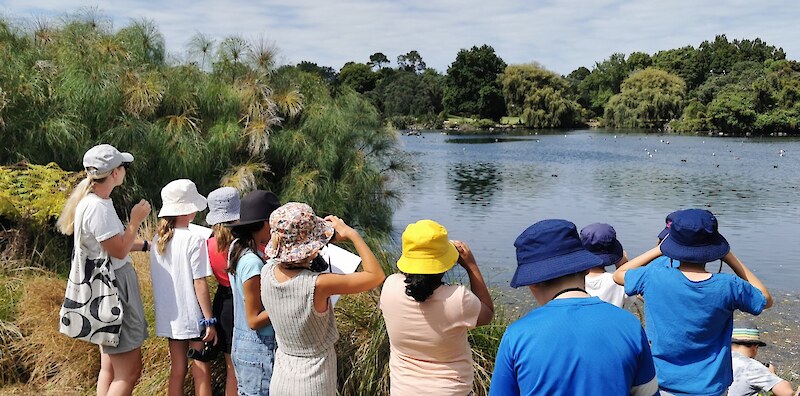 Since 2023, Urban Ark has been offering its Te Wai Ōrea Education Programme to local schools. With ongoing funding from Waitematā Local Board and support from Albert-Eden Local Board we deliver sessions adapted to work with STEM curriculums at late Primary (Yr 5 & 6), Intermediate (Yr 7 & 8) and early Secondary (Yr 9 & 10) levels. Engagine with our educaiton programme over several years allows for a sequential progression of learning with students building their knowledge base.
Our experienced and qualified educators combine hands-on learning with a strong focus on environmental science and acknowledgement of mātauranga Māori:
- Te Taiao – the environment
- Mauri tu – environmental health
- Taupuhipuhi – interconnectedness and interdependence of living things, habitats and systems
- Tūrangawaewae – identity and belonging, a place to put your feet, a place to feel empowered and connected
The centrepiece of the programme is a full school day visit to Te Wai Ōrea / Western Springs Lakeside Park, where ongoing restoration efforts aim to increase native biodiversity and help the land and waterways function as part of an ecological corridor for movement of native species through the urban landscape of Tāmaki Makaurau. The community is an invaluable partner in these efforts and we hope that more people come to recognise and appreciate the taonga on our doorstep.
Experiences
Depending on the kids’ ages, practical instruction might include:
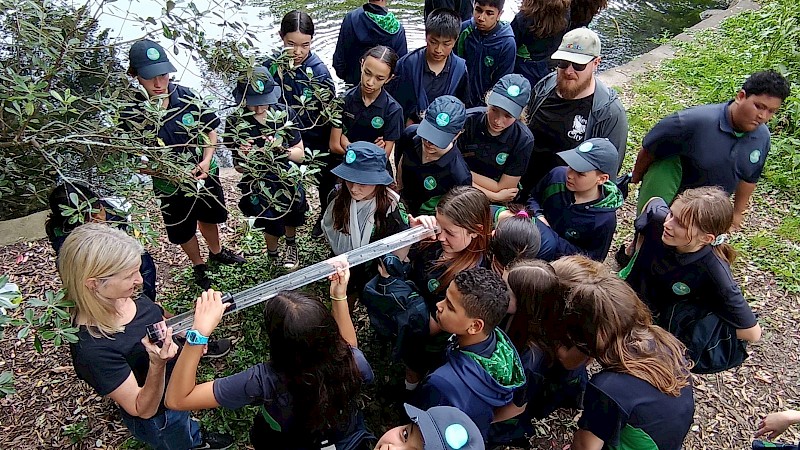
- Freshwater monitoring – testing water quality (pH, clarity, dissolved oxygen), identifying fish and macroinvertebrates
- Predator monitoring – using tracking cards and chew cards to identify animals by footprint and bite. Using trail cameras for visual ID
- Predator control – use of various types of traps, lures and baits
- Bird ID and monitoring –correct use of binoculars, recognising species and their calls, conducting 5-minute bird counts
- Terrestrial invertebrates – ID and monitoring bugs and creepy crawlies
- Pest plants – identifying weeds, learning about the ecological problems they cause and how to control them
- Native plants – identifying species and learning about their use in rongoa Māori (traditional medicine)
- GPS navigation – use of equipment and radio-telemetry monitoring
 Programme sequence
The Te Wai Ōrea day-trip is bookended by educator visits to your classroom to help tailor the programme and then consolidate the learning.
- Initial discussion – if the programme is new to your school our educators will visit the teachers and/or school leadership to discuss how best to tailor the programme to the curriculum streams and interests of the class.
- Classroom pre-visit (1hr) – we visit the class to help prime the kids for the full-day class visit to Te Wai Ōrea. We will introduce the tamariki to some of the concepts we’ll be discussing at Te Wai Ōrea. This normally takes place about a week before the Te Wai Ōrea visit.
- Te Wai Ōrea visit (5hr) – the cohort travels to Te Wai Ōrea for the school day. We typically base ourselves at the Circle of Friends (a quiet part of the park) and the tamariki take turns doing three activities (about 45min each) separated by morning tea and lunch breaks. Everyone gets to do each activity over the course of the day.
- Classroom post-visits (1hr each) – our educators visit the school once or twice to help the class and teachers consolidate the learning and explore ways the class can make a positive environmental impact on Te Wai Ōrea, their school and their home. These visits take place from one to six weeks after the Te Wai Ōrea visit.
 “I can…” Conservation Skills
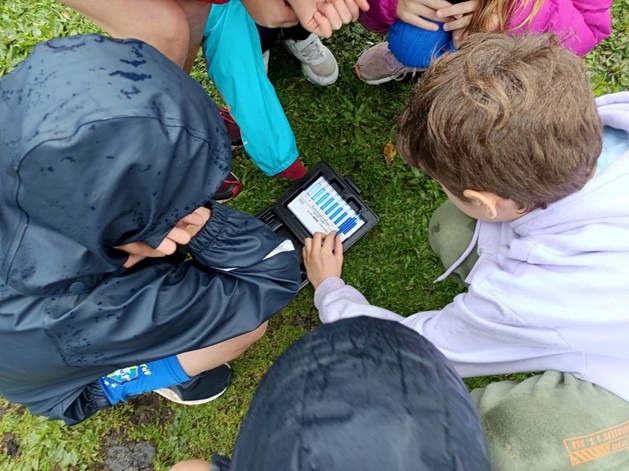
Through active engagement in experiential tasks students will learn a new set of skills they can employ to make a positive contribution to conservation in Aotearoa.
A selection of ‘WALTs’ (We are learning to)….
Describe how plants and animals prefer certain habitats
Set a tracking tunnel to monitor animal footprints
Identify what pests are present by their footsteps
Use binoculars to identify birds
Identify common native birds and do a 5-minute bird count
Identify common native plants and their use in rongoā Māori
Identify common pest plants and describe the ecological problems they cause
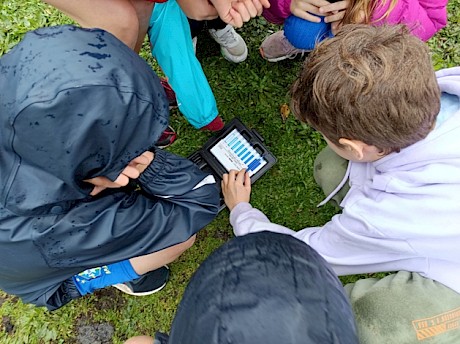
Measure the clarity, pH, and flow rate of water
Identify common freshwater macroinvertebrates
Use a GPS unit to find a waypoint
Practicalities
- Numbers – we typically take up to 45 tamariki each day in Te Wai Ōrea. If your cohort is bigger we can take the group over two or more days.
- Weather – Urban Ark operates this education programme throughout the school year. Each season has its benefits. We encourage the kids to embrace whatever the weather throws at us, though we appreciate that a sustained cold and rainy day isn’t much fun for anyone. We normally have a ‘rain day’ scheduled.
- Getting there – some schools are close enough for the tamariki to walk to Te Wai Ōrea / Western Springs Park. For those that aren’t we recommend hiring a bus or arranging parent car pooling.
- Food and drink – tamariki should bring a water bottle and a packed lunch.
Contact
To discuss taking part in our Te Wai Ōrea Education Programme, contact [Enable JavaScript to view protected content], our education lead.